

Dar Al-Dabbagh Chaouara Fez: New Life in the World’s Oldest Tannery
Dar Al-Dabbagh Chaouara in Fez is not just a tannery—it’s a symbol of Moroccan heritage, craftsmanship, and resilience. Known as the oldest vegetable tanning leather tannery in the world, this historic site has recently undergone a major restoration, breathing new life into the traditional leather industry and reviving its role as a vital tourist attraction.
A Historic Revival
Located in the heart of Fez’s Blida district, near the Sidi Hamoumi corner and Derb El Mitre, Dar Al-Dabbagh Chaouara has been restored as part of Morocco’s national program to rehabilitate historic monuments. Covering over 7,200 square meters and hosting more than 600 traditional artisans, the tannery now produces between 3,000 and 5,000 leather pieces daily.
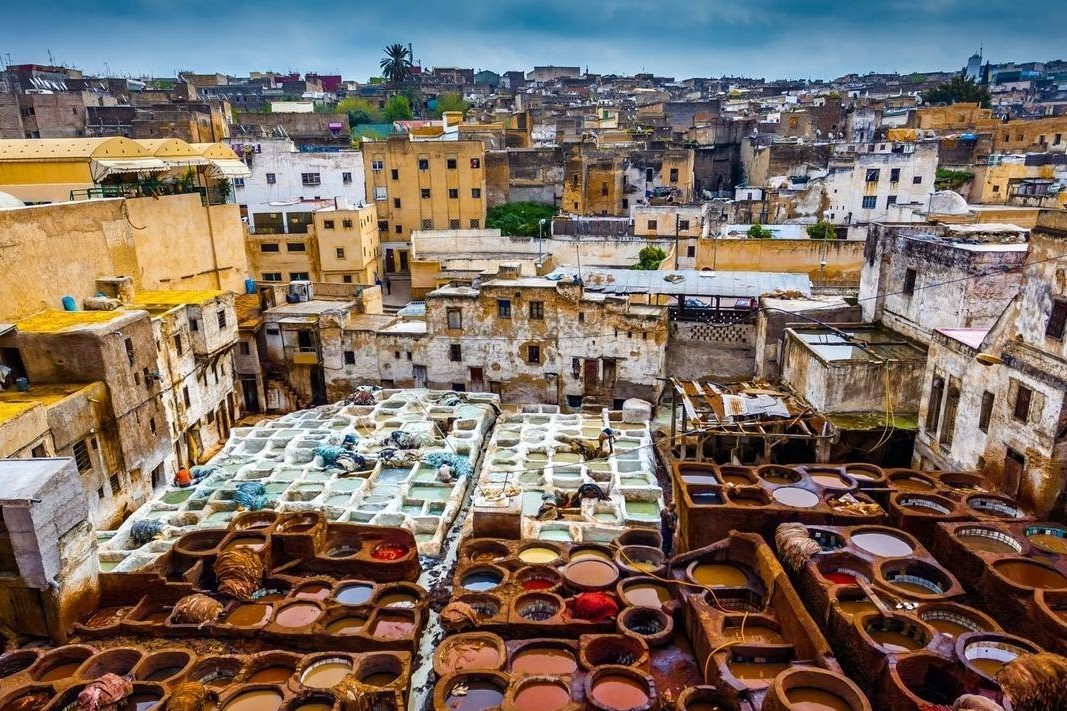
More than 90% of tourists who visit Fez are drawn to this ancient site, fascinated by the vibrant basins and centuries-old tanning techniques that have made it famous worldwide.
The Leather Industry and Environmental Heritage
The newly launched “natural leather” certification is set to distinguish Dar Al-Dabbagh Chaouara’s vegetable-tanned leather from synthetic competitors. This initiative not only elevates the value of Moroccan leather products but also highlights their ecological and cultural significance.
According to Moroccan experts, the tannery’s restoration plays a key role in preserving civilizational heritage and enhancing local economic development. It connects modern digital promotion with traditional mastery—an ideal blend for promoting sustainable tourism and artisanal products.
Restoration Achievements and Challenges
While the restoration achieved over 90% of its goals, key facilities such as bathrooms, water wells, and refining mechanisms still require updates. Moreover, artisans express concern about stagnant leather sales due to global economic challenges and competition from synthetic leather, primarily imported from China.
Despite modernizing efforts, the financial return for many craftsmen remains limited. Industry professionals stress the need for continued investment in export facilitation and domestic promotion to support local tanners.
Dar Al-Dabbagh Chaouara: A Living Tourist Landmark
For any visitor to Fez, a stop at Dar Al-Dabbagh Chaouara is essential. The circular dyeing vats filled with plant-based colors form a kaleidoscopic view, mesmerizing tourists and offering an authentic window into Morocco’s centuries-old leather craft.
At its peak, the tannery employs around 1,000 workers, including artisans and apprentices. It exclusively uses natural materials like salt, lime, saffron, and even pomegranate peels. The physical labor required for tanning is intense, yet it results in uniquely vibrant and durable leather goods. Want to explore more of Morocco’s living traditions? Join us on a tour from Marrakech through the desert or learn authentic Moroccan cooking techniques.
Conclusion
The restoration of Dar Al-Dabbagh Chaouara Fez is more than a conservation project—it’s a cultural renaissance. This monument not only preserves Moroccan identity but also reinforces the country’s global image as a center of craftsmanship and cultural depth. However, to sustain this success, Morocco must continue supporting its artisans through investment, digital marketing, and export facilitation.
Dar Al-Dabbagh Chaouara remains a beating heart of Fez—and a symbol of Moroccan authenticity.